


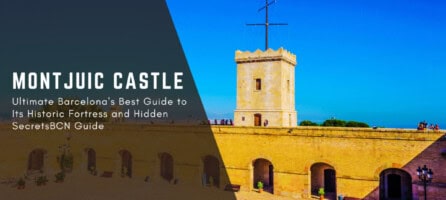
Montjuïc Castle is a must-visit destination in Barcelona. Standing high on Montjuïc hill, this historic fortress offers spectacular views of the city and the sea.
Conçu à l'origine pour la défense militaire, il a été le témoin de batailles et de sièges et a même servi de prison. Aujourd'hui, c'est un haut lieu de la culture, avec des jardins et des expositions qui reflètent son riche passé.
When you visit Montjuïc Castle, you’ll find plenty to explore. Highlights include the castle’s walls and towers, which offer breathtaking panoramic views. The area is also home to beaux jardins et divers monuments.
La vue du sommet est à ne pas manquer ; c'est l'un des meilleurs points de vue pour voir Barcelone dans toute sa splendeur. N'oubliez pas de vous renseigner sur les événements et expositions à venir pendant votre visite. Le château accueille des expositions historiques et des expositions d'art contemporain.
Guided tours are also available, which can provide deeper insights into Montjuïc Castle’s history. While you’re there, take a moment to enjoy the serene gardens and breathtaking views of Barcelona.
Historique

Montjuïc Castle has a rich history tied to Barcelona’s political and military events. Its transformation from a simple hill to a significant military fortress marks various important moments in the region’s history.
Origines et propriété royale
Montjuïc Hill did not have any strategic structures until the late 15th century. It began gaining importance when King Philip IV recognized its potential. The castle’s early construction took shape during the Catalan Revolt in 1640.
Cette construction rapide était principalement destinée à des fins défensives, faisant de la colline un atout royal pour protéger Barcelone des invasions.
Transformation d'une forteresse militaire

Montjuïc Castle was further fortified in the 18th century. During the War of the Spanish Succession, it saw numerous upgrades to enhance its defensive capabilities. It officially became a military fortress, with thick walls and various defensive structures.
Ces améliorations lui ont permis de devenir un site militaire clé, contrôlant la région environnante et servant de place forte pendant les conflits.
The Reapers’ War and Subsequent Conflicts
The Reapers’ War, also known as the Catalan Revolt, was a significant event for Montjuïc Castle. Constructed rapidly in 1640, this early fortress played a crucial role in the conflict.
Subsequent conflicts, such as the bombardment of Barcelona in 1842, further showcased its strategic importance. These events cemented Montjuïc Castle’s place in Catalonia’s turbulent history.
Civil War and Franco’s Repression
Montjuïc Castle was a prison for political detainees during the Spanish Civil War. After the war, it continued to serve as a site of repression under Franco’s regime. The castle held numerous political prisoners and witnessed many executions.
Today, it stands as a reminder of these dark times, symbolizing both the resilience and suffering of the people during Franco’s dictatorship.
Architecture et design

Montjuïc Castle is an exceptional historic fortress showcasing military engineering and design from different eras. Significant restorations have preserved its original structure and added modern elements.
Forteresse et bastions

Montjuïc Castle’s architecture reflects its primary role as a military fortress. Built-in 1640, the first fortress was designed by military engineers who utilized the strategic location atop Montjuïc hill. This advantageous spot allowed for extensive views over Barcelona and the surrounding sea.
Juan Martín Cermeño remodeled the castle in the 18th century, expanding it into a star-shaped fortress with multiple bastions.
Ces bastions comportaient des pointes de flèches afin de constituer des positions défensives contre les invasions. La forme en étoile était courante dans l'architecture militaire de l'époque, car elle permettait de résister aux attaques d'artillerie et de créer des champs de tir qui se chevauchaient.
Restauration et structure actuelle
Over the centuries, Montjuïc Castle has undergone several restorations. In the 20th century, efforts were made to preserve the fortress’s historical and architectural integrity.
La restauration s'est attachée à conserver les structures défensives d'origine tout en rendant le site accessible aux visiteurs modernes.
Aujourd'hui, le château comporte des sentiers de promenade et des plates-formes d'observation qui permettent d'explorer les bastions et les murs fortifiés. Autrefois lourdement gardée, l'entrée principale est aujourd'hui un point d'entrée accueillant pour les touristes.
The restored parts of Montjuïc Castle offer an excellent blend of historic architecture with modern amenities, creating an engaging experience for visitors.
The site also hosts cultural events and exhibitions, enhancing its appeal as a symbol of Barcelona’s history.
Musées et expositions
Montjuïc Castle has transformed from a military prison to a museum with permanent and temporary exhibitions. Visitors can explore a mix of historical displays and contemporary art.
Une ancienne prison militaire transformée en musée
Montjuïc Castle once served as a military prison, housing political prisoners and those accused of treason. This dark chapter in its history ended in 1960 when the castle ceased to function as a prison.
Aujourd'hui, des vestiges de cette époque, notamment des cellules et des objets de l'époque, sont visibles, rappelant tristement le passé de la prison.
La transformation en musée a préservé son essence historique tout en réaffectant l'espace à des fins éducatives. La place d'armes, qui était autrefois un lieu d'exercices militaires, sert désormais d'entrée aux expositions.
This repurposing offers insight into both the architectural and historical significance of Montjuïc Castle.
Expositions permanentes et temporaires
You will find a mix of permanent and temporary exhibits in the museum. Permanent displays include weapons, uniforms, and other military artifacts that reflect the castle’s history. These exhibits offer a deep dive into the various conflicts and military strategies that shaped the region.
Le château accueille également des expositions temporaires, qui changent périodiquement. Il peut s'agir d'art contemporain, de rétrospectives historiques ou de vitrines culturelles. Chaque exposition permet aux visiteurs d'aborder différents aspects de l'histoire et de la culture.
You can check the castle’s official website to see what temporary exhibitions are currently on display.
Bathrooms, gift shops, and cafes are available, making your visit more comfortable. Remember to check the opening times and special events before planning your visit to Montjuïc Castle.
Informations pour les visiteurs

When planning your visit to Montjuïc Castle, you must know the opening times and ticketing options, take advantage of guided tours and educational programs, and understand the accessibility and services available.
Horaires d'ouverture et billetterie
Montjuïc Castle is open daily from March 1 to October 31 between 10 a.m. and 8 p.m.; the box office closes at 7:30 p.m.
Du 1er novembre au 28 février, il est ouvert de 10 h à 18 h, la billetterie fermant à 17 h 30. Le château est fermé le 25 décembre et le 1er janvier.
Les prix des billets sont les suivants :
- Admission générale (13-64 years): €23.00
- Senior (65+ years): €22.00
- Junior (8-12 years): €17.00
- Les enfants (3-7 ans) : Gratuit
Reduced admission is sometimes available for groups and during special events. If you’re planning a group visit, it’s highly recommended that you make a reservation in advance.
Visites guidées et programmes éducatifs
Montjuïc Castle offers guided tours in multiple languages, ensuring you get the most out of your visit. Tours are available Monday to Friday at 12:30 and 5:00 p.m., and on weekends and public holidays at 11:30 a.m., 1:00 p.m., and 4:30 p.m.
Les Centre d'accueil des visiteurs provides a detailed journey through the castle’s history with themed presentations.
Des programmes éducatifs sont conçus pour les enfants et les adultes, ce qui en fait une expérience d'apprentissage parfaite pour les familles et les passionnés d'histoire.
If you wish to book a guided tour or educational program, it’s best to call or email ahead. This ensures you will have a spot, and special arrangements can be made for larger groups or specific languages.
Accessibilité et services
Montjuïc Castle is committed to being accessible to all visitors. The main areas of the castle, including the Visitor Centre and exhibitions, are wheelchair accessible.
Des rampes et des ascenseurs ont été installés pour faciliter les déplacements. Des toilettes accessibles sont également disponibles sur place.
Parking is available near the castle’s entrance for those driving. If you’re taking public transportation, several bus lines stop close to the castle, making reaching it convenient.
Les services supplémentaires comprennent :
- Bureaux d'information : Pour les demandes de renseignements et d'assistance.
- Boutiques de cadeaux : Vente de souvenirs et de matériel pédagogique.
- Cafétéria : Collations légères et boissons.
- Aires de repos : Bancs et zones ombragées pour la détente.
Importance culturelle et activités

Montjuïc Castle is a fortress with a rich military history and an important cultural hub. From political struggles to vibrant art and music events, the castle plays a significant role in Barcelona’s cultural landscape.
Histoire militaire et politique
Montjuïc Castle has witnessed many pivotal moments in Catalonia’s history. Originally built as a military fortress, it played a key role during the War of the Spanish Succession and the Catalan Revolt.
It later became a political prison, holding many prominent captives during Spain’s turbulent periods.
You can still see remnants of its defensive architecture, such as its star-shaped design meant to fend off invaders. The castle’s strategic location on Montjuïc Hill offers stunning views of Barcelona, further emphasizing its historical importance.
Manifestations artistiques et musicales
Montjuïc Castle is a lively venue for art and music events throughout the year. The castle grounds host open-air cinema nights, concerts, and art exhibitions.
These events attract locals and tourists, making it a bustling hub of activity. The castle’s large open spaces allow you to catch a concert or film screening under the stars.
Ces événements culturels font du château un lieu accessible à diverses formes d'expression artistique, de la musique classique à l'art contemporain.
Activités culturelles et célébrations
Montjuïc Castle is also a venue for numerous cultural activities and celebrations. It hosts community events, educational programs, and workshops, fostering communal engagement.
Des festivals locaux et des foires y sont souvent organisés, attirant des foules de toute la ville.
The castle’s role in hosting these events is crucial for keeping the spirit of Catalonia alive. The Barcelona City Council works closely with cultural organizations to ensure a diverse and inclusive lineup of activities. From children’s activities to historical seminars, Montjuïc Castle offers something for everyone.
Attractions environnantes

Several nearby attractions will enrich your experience when you visit Montjuic Castle. These include the lush Montjuïc Park and Gardens and the culturally significant Museu Nacional d’Art de Catalunya, offering unique insights into Barcelona’s history and beauty.
Montjuïc Park and Gardens
Montjuïc Park is a large area surrounding Montjuic Castle, offering a variety of gardens and open spaces. The park is home to several themed gardens, such as the Jardines de Mossen Cinto Verdaguer, which features an array of Mediterranean flora and fauna.
Vous pouvez également explorer le stade olympique, un site important des Jeux olympiques d'été de 1992.
Another highlight of Montjuïc Park is the Magic Fountain. Known for its stunning light and music shows, the fountain attracts many visitors, especially during the evenings.
L'environnement luxuriant est parfait pour une promenade relaxante ou un pique-nique, ce qui en fait un endroit idéal pour se détendre après la visite du château.
Musée national d'art de Catalogne
The Museu Nacional d’Art de Catalunya is located at the base of Montjuïc hill, a short distance from Montjuic Castle. This museum houses an extensive collection of Catalan art, ranging from Romanesque to modern works.
Notable sections include Gothic art and Renaissance pieces, offering a comprehensive overview of the region’s rich artistic heritage.
The museum building itself is impressive, constructed in a grand style and offering panoramic views of Barcelona from its steps. Inside, you’ll find masterpieces by renowned artists, making it a must-visit for art enthusiasts. The museum also hosts temporary exhibitions, providing fresh content for repeat visitors.
Vues panoramiques et accessibilité

Nestled on Montjuïc Hill, Montjuïc Castle offers stunning views and convenient ways to reach them. Here, you can find the best spots to take in the scenery and learn about transportation options such as the funicular and cable car.
Tour de guet et terrasse
From the castle’s watchtower and terrace, you can see a full 360º panorama of Barcelona. Views range from the bustling port to the Mediterranean Sea and Baix Llobregat area. The terrace’s elevated positioning makes for a great photo op. It’s an ideal place to capture the city’s skyline.
The Parade Ground terrace stands out because it’s spacious and provides a comfortable viewing experience. Its height offers clear, uninterrupted views, giving you an excellent perspective of the city’s layout. If you enjoy panoramic views, the terrace is a must-visit spot.
Funiculaire et téléphérique

You can access Montjuïc Castle via funicular and cable car, making your journey up the hill exciting and leisurely. The funicular connects to the metro, easing transportation from various parts of the city. As it ascends, it offers brief glimpses of lush greenery.
The Montjuïc Cable Car takes you up to the castle from the bottom of the hill for a more thrilling ride. This journey provides amazing aerial views of the city and the castle.The cable car is a fun way to add adventure to your visit. It stops at various points, letting you explore multiple attractions on Montjuïc Hill.
Combining both modes of transport makes for a comprehensive and accessible way to enjoy the Montjuïc Castle experience.
Montjuïc Castle is a beacon of history and culture atop Barcelona’s scenic hill. Its rich past as a military fortress and prison contrasts with its vibrant present as a cultural hub, offering panoramic views and diverse events.
Visiting here is not merely a step back in time but a full experience of Barcelona’s heritage and beauty, making it an essential stop for any traveler.
