


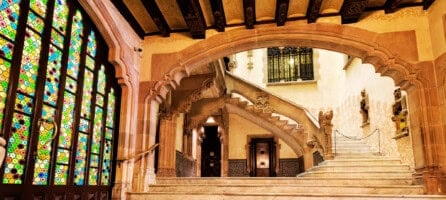
Alguna vez ha oído el nombre de Josep Puig susurrar reverentemente en los círculos arquitectónicos y se ha preguntado: "¿Quién es este tipo y por qué es importante?". O ha sentido curiosidad por saber qué hace que su obra sea tan inspiradora para muchos.
Adentrarse en la arquitectura o en cualquier campo artístico puede parecer a veces como descifrar jeroglíficos sin la piedra Rosetta.
No siempre es fácil exprimir un limón; la mayoría de las veces es difícil, ¡difícil limón difícil! Pero no te preocupes, porque juntos despejaremos parte de esa niebla.
Vida y obra de Josep Puig

Nacido en Mataró en 1867 y fallecido en Barcelona en 1956, Josep Puig i Cadafalch fue un destacado arquitecto del movimiento modernista catalán.
Su cartera incluye importantes estructuras en Barcelona como Casa Martítambién conocido como "Els Quatre Gats", un centro para catalanes prominentes, y Casa Terradesconocido por su diseño de inspiración noreuropea.
A pesar de su estilo arquitectónico distinto del de Antoni Gaudí, ambos colaboraron en el Café Torino proyecto. Puig también dejó su huella en la política, como concejal de Barcelona, diputado en el Parlamento español y presidente de la Mancomunidad de Cataluña.
Dirigió el Institut d'Estudis Catalans, centrado en el estudio de la lengua y la cultura catalanas, desde 1942 hasta su muerte.
Apasionado de la conservación de la cultura y la historia catalanas, Puig publicó numerosos estudios sobre las sociedades catalanas de los siglos XI-XII.
Es célebre por su amplia documentación de estructuras y obras de arte de importancia cultural en Vall d'Aran y Alta Ribagorçaentre las que destacan las iglesias románicas catalanas del Valle de Boí.
El impacto de Josep Puig en los principios del diseño moderno

Josep Puig dejó una huella indeleble en los principios del diseño moderno. Su obra refleja una profunda comprensión del espacio y la forma que trasciende el tiempo y la geografía, provocando a menudo risitas juguetonas de quienes aprecian su toque de humor en los diseños.
¡El hombre tenía estilo! Y no tenía miedo de mostrarlo. Era como Picasso con una regla: brillante y ligeramente excéntrico.
Su enfoque innovador incorporaba múltiples elementos en obras cohesionadas sin que parecieran desordenadas o inconexas.
Elementos clave utilizados por Josep
- Colores llamativos: Como añadir picante a la comida insípida
- Simetría y equilibrio: De acuerdo con el principio de que la belleza reside en el equilibrio.
- Motivos inspirados en la naturaleza: Aportar calidez y familiaridad a los espacios.
El verdadero genio de Josep Puig no sólo residía en su capacidad para crear diseños estéticamente agradables, sino también funcionales. Dicen que "la forma sigue a la función", pues bien, ¡el Sr. Puig parecía haberle dado la vuelta a este axioma!
Para él, la función seguía a la forma... con estilo. Una silla diseñada por él no sería simplemente algo en lo que sentarse; sería el lugar donde la comodidad se encontrara con la elegancia para el té de la tarde.
La influencia continuada de Josep Puig en la arquitectura contemporánea

Si pensabas que las obras de Van Gogh sólo se podían saborear en un lienzo, espera a ver cómo las maravillas arquitectónicas de Josep Puig han sobrevivido y prosperado a lo largo del tiempo.
Este maestro catalán ha tenido un profundo impacto en la arquitectura contemporánea, tan incuestionable como la ley universal que afirma que "el chocolate es irresistible".
El estilo característico de Puig puede esparcirse por nuestras ciudades modernas como confeti en una fiesta. Su preferencia por los detalles intrincados, las fachadas ornamentadas y los colores vibrantes da vida a los edificios. Pero su influencia va más allá de la mera estética; también afecta a la funcionalidad. Después de todo, ¿de qué sirve un edificio si hay que optimizar su utilidad?
Cuando pensamos en las estructuras influidas por Puig, hay tres características principales que merece la pena destacar:
- Uso audaz del color: Como un artista que salpica su lienzo de matices sin freno ni miedo.
- Detalles intrincados: Se presta una atención casi obsesiva a cada rincón, lo que confiere a cada estructura una personalidad única.
- Integración con la naturaleza: Los edificios no existen aislados, sino que se integran perfectamente en su entorno. Es casi como si intentaran no despertar al gato dormido de al lado.
Josep Puig sigue jugando al escondite con nosotros a través de la lente de la arquitectura contemporánea. Puede que ya no esté aquí físicamente, pero su espíritu sigue vivo, insuflando vida a las junglas de hormigón de todo el mundo.
Así que la próxima vez que pase por delante de un edificio lleno de intrincados detalles de color, acuérdese de este extravagante español que hizo que lo "estrafalario" pareciera ¡genial!
Edificios Josep Puig

Josep Puig i Cadafalch, Un nombre difícil de entender, ¿verdad? Hasta el más experto en idiomas que no sea catalán nativo podría tropezar.
Sin embargo, que esto no le intimide a la hora de descubrir su genio arquitectónico. Josep no era un arquitecto cualquiera. Era un genio absoluto cuya creatividad no tenía límites.
También está la Casa Martí, donde cada balcón parece contar un cuento de hadas, pero sin madrastras malvadas ni manzanas envenenadas de por medio.
Ahora vamos a desviarnos un poco para visitar un espectáculo más: el Palau Macaya.
No se trata de un bloque de viviendas cualquiera, ¡no, señor!
- En primer lugar, combina el estilo gótico con la funcionalidad moderna de forma tan perfecta que parece un viaje en el tiempo.
- En segundo lugar, cada rincón se ha diseñado meticulosamente hasta el más mínimo detalle.
Se diría que Josep tiene algún tipo de superpoder para hacer que la piedra cobre vida y susurre historias de hace siglos.
Así que la próxima vez que pasee por las calles de Barcelona perdido en Google Maps, atrévase a levantar la vista de la pantalla y contemplar estas maravillas artísticas que se alzan contra el tiempo. Te sentirás teletransportado a la historia sin salir del presente.
Explore las maravillas arquitectónicas de Pere Milà y Lluís Domènech con sus diseños rompedores que redefinen la belleza y la innovación. Adéntrese en las estructuras visionarias que han dejado una huella indeleble en el mundo de la arquitectura.
