


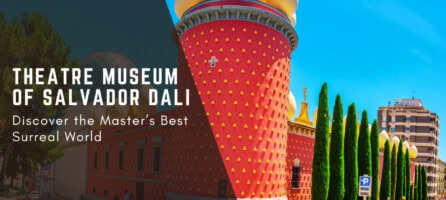
Bei einem Besuch in Figueres in Katalonien, Spanien, ist das Theatermuseum von Salvador Dalí ein Muss für Kunstliebhaber und neugierige Reisende. Dieses unglaubliche Museum, das dem surrealistischen Künstler Salvador Dalí gewidmet ist, ist keine gewöhnliche Kunstgalerie; es ist eine skurrile Welt der Fantasie und Kreativität.
Das 1974 in den Ruinen des alten Stadttheaters errichtete Museum verkörpert Dalís exzentrisches Genie und bietet ein Erlebnis der besonderen Art. Bei Ihrem Rundgang durch das Museum werden Sie eine umfangreiche Sammlung von Dalís Werken entdecken, von Gemälden und Skulpturen bis hin zu Installationen, die die Grenzen der Realität herausfordern.
Der Künstler war maßgeblich an der Gestaltung des Museums beteiligt und hat dafür gesorgt, dass jeder Winkel des Museums seine einzigartige Vision widerspiegelt. Salvador Dalís letztes Meisterwerk, das Museum selbst, ist das größte surrealistische Objekt der Welt und damit eine wirklich unverwechselbare Attraktion im Herzen von Figueres.
Neben den faszinierenden Exponaten bietet das Museum auch einen atemberaubenden Innenhof und ein mit riesigen Eiern geschmücktes Dach, die das surreale Ambiente noch verstärken.
Wenn Sie eine Reise planen, können Sie schon vorher einen virtuellen Besuch abstatten. Dieser bezaubernde Ort bietet die seltene Gelegenheit, tief in die Gedankenwelt eines der einflussreichsten Künstler des 20. Jahrhunderts einzutauchen.
Geschichte des Dalí-Theater-Museums

Das Dalí-Theater-Museum in Figueres ist ein ikonisches Wahrzeichen, das als lokales Theater begann und sich zu einer der weltweit größten Sammlungen surrealistischer Kunst entwickelte. Salvador Dalí und die Ereignisse des Spanischen Bürgerkriegs haben diese Umwandlung stark beeinflusst.
Vom Theater zum Museum
Ursprünglich war das Gebäude ein städtisches Theater in Figueres, das im 19. Jahrhundert errichtet wurde. Es diente als zentraler kultureller Knotenpunkt für die Gemeinde.
Im Jahr 1939, während des Spanischen Bürgerkriegs, wurde das Theater durch einen Brand schwer beschädigt. Viele Jahre lang stand es in Trümmern. In den frühen 1970er Jahren nutzte Salvador Dalí die Überreste des Theaters als Museum für seine Kunst.
Das Dalí-Theater-Museum wurde 1974 offiziell eingeweiht. Seitdem zieht es Besucher aus der ganzen Welt an, die Dalís surrealistische Werke erleben wollen.
Salvador Dalís Mitwirkung
Salvador Dalí war maßgeblich an der Planung und Gestaltung des Museums beteiligt. Er wollte, dass es nicht nur ein Museum ist, sondern eine surrealistische Gesamterfahrung. Dalí gestaltete alles im Museum sorgfältig so, dass es seine künstlerische Vision widerspiegelt.
Einige seiner berühmtesten Werke, wie "Port Alguer" (1924) und "Leda Atomica" (1949), sind hier zu sehen. Dalí sorgte auch dafür, dass der Raum verschiedene Stadien seiner Entwicklung als Künstler zeigte. Indem er sich an jedem Detail beteiligte, stellte Dalí sicher, dass das Museum eine Erweiterung seines surrealistischen Universums sein würde. Er lebte in dem Museum von 1984 bis 1989, also bis zu seinem Tod.
Die Wiedergeburt nach dem Spanischen Bürgerkrieg
Das Theatergebäude wurde während des Spanischen Bürgerkriegs stark beschädigt. Viele Jahre lang hatte die Gemeinde wenig Hoffnung auf seine Wiederherstellung.
Als Dalí beschloss, die Ruinen in ein Museum umzuwandeln, war dies ein bedeutender Akt der kulturellen Wiedergeburt. Er bewahrte die Überreste des Theaters und schuf einen neuen Ort, der sowohl die Vergangenheit als auch die Zukunft feiert.
Heute können die Besucher das Museum erkunden und eine Mischung aus der Geschichte des Theaters und den avantgardistischen Werken Dalís sehen, was es zu einem einzigartigen Ziel macht. Das Dalí-Theater-Museum steht heute als Denkmal für Zerstörung und Kreativität.
Architektonisches Wunderwerk

Das Dalí-Theater-Museum in Figueres, Spanien, ist ein beeindruckendes Beispiel für künstlerische und architektonische Visionen. Sein einzigartiges Design und die signifikante Kuppelstruktur machen es zu einem Muss für Kunst- und Architekturliebhaber gleichermaßen.
Das einzigartige Design des Museums
Das Dalí-Theater-Museum zeichnet sich durch seine ungewöhnliche und phantasievolle Gestaltung aus, die den surrealen Stil von Salvador Dalí widerspiegelt. Das Gebäude erhebt sich aus den Ruinen des alten Stadttheaters von Figueres. Der Künstler hat jeden Aspekt des Museums visualisiert, um Sie in seine kreative Welt zu entführen.
Leuchtende Farben, riesige Eier und Brotwände sind nur einige der skurrilen Elemente, die Sie sehen werden. Dalí wollte einen Ort schaffen, an dem sich alles traumhaft und phantasievoll anfühlt, so dass man das Gefühl hat, in eines seiner Gemälde einzutreten.
Die lebendige und luftige Atmosphäre im Inneren des Museums, das von zierlichen weißen Säulen getragen wird, ist wirklich etwas, das Sie sehen müssen. Es ist ein visuelles Fest, das dem surrealen und fesselnden Charakter von Dalís Werk treu bleibt.
Die Bedeutung der Kuppelstruktur
Die Kuppel des Dalí-Museums ist eines der Wahrzeichen des Museums. Diese große Glaskuppel, die bei der Renovierung in den 1980er Jahren hinzugefügt wurde, ist ein architektonisches und symbolisches Meisterwerk. Die Kuppel krönt das Museum und ist schon von weitem zu sehen, was sie zu einem Wahrzeichen von Figueres macht.
Die Kuppel ist mit surrealen Motiven verziert und lässt natürliches Licht in das darunter liegende Museum strömen. Dieses clevere Design beleuchtet nicht nur die Kunstwerke, sondern schafft auch eine großzügige, einladende Atmosphäre. Sie steht für Dalís Wunsch, Kunst und Leben zu verbinden und das Museum in ein Kunstwerk zu verwandeln.
Antoni Pitxot, ein enger Freund und Künstlerkollege von Dalí, half bei der Verwirklichung dieser Vision und sorgte dafür, dass das Bauwerk sowohl praktisch als auch ein wahres Spiegelbild von Dalís Genie war. Die Kuppel ist ein Zeugnis für Zusammenarbeit und Kreativität und symbolisiert die unendlichen Möglichkeiten des Surrealen.
Ständige Sammlungen und Exponate

Das Theatermuseum von Salvador Dalí beherbergt eine breite Palette von Kunstwerken, die aufgrund ihrer Einzigartigkeit und surrealen Schönheit Besucher anziehen. Zu den wichtigsten Highlights gehören Gemälde und Skulpturen, das innovative Zimmer von Mae West und der fesselnde Palast des Windes. Jedes dieser Werke bietet einen unverwechselbaren Einblick in Dalís Gedankenwelt.
Gemälde und Skulpturen
Das Theatermuseum beherbergt über 1.500 Kunstwerke, darunter Gemälde und Skulpturen von Salvador Dalí. Eines der berühmtesten Werke ist Das Gespenst des Sex-Appeals aus dem Jahr 1932, das Dalís tiefes Eintauchen in den Surrealismus zeigt.
Hier finden Sie auch Port Alguer, ein Meisterwerk aus dem Jahr 1924, das eine lebhafte Meereslandschaft darstellt. Verpassen Sie nicht Sanftes Selbstporträt mit gegrilltem Speck aus dem Jahr 1941, ein eigenwilliges und faszinierendes Selbstporträt.
Die Skulpturen sind nicht weniger faszinierend. Ein herausragendes Stück ist das Monument für Francesc Pujols. Diese Statue zahlt ist eine Hommage an den katalanischen Philosophen und verleiht der Kollektion eine philosophische Note.
Zimmer von Mae West
Der Saal von Mae West ist eine der interessantesten Abteilungen des Museums. Aus einem bestimmten Blickwinkel betrachtet, ist er so gestaltet, dass er dem Gesicht der berühmten Schauspielerin Mae West ähnelt. Dalí schuf diese surreale Installation aus Möbeln und Dekorationen.
Sie werden Gegenstände wie das Mae West Lips Sofa sehen, ein rotes Sofa in Form von Lippen. Der Raum enthält auch augenähnliche Gemälde und einen haarähnlichen Vorhang, der die Gesichtsillusion vervollständigt. Diese ganze Einrichtung unterstreicht Dalís kreative Mischung aus Kunst und Design.
Palast des Windes Zimmer
Der Saal Palast des Windes ist ein beeindruckender Raum. Benannt nach dem Fresko an der Decke, bietet er einen traumhaften Blick auf Dalís künstlerische Vision. Das Gemälde bedeckt die gesamte Decke und zeigt schwebende Figuren und himmlische Landschaften.
In diesem Raum erleben Sie eine einzigartige Mischung aus Farben, Perspektiven und Formen. Dalí gestaltete den Raum so, dass man sich wie in einem Traum fühlt. Der Raum enthält auch andere Kunstwerke, die das ätherische Gesamtbild ergänzen.
Dalís Meisterwerke und Themen

Im Theatermuseum von Salvador Dalí können Sie einige seiner bedeutendsten Werke und die einzigartigen Themen, die sie durchziehen, erkunden. Jedes Werk bietet einen lebendigen Einblick in seinen komplexen Geist, von den surrealen kosmischen Landschaften bis zu seiner Faszination für atomare und molekulare Strukturen.
Die kosmischen Athleten
"Die kosmischen Athleten" ist eines von Dalís weniger bekannten, aber höchst faszinierenden Werken. Dieses Gemälde veranschaulicht seine Faszination für den Raum und die menschliche Gestalt. Es zeigt Figuren, die an Athleten erinnern und in einer surrealen, kosmischen Landschaft schweben. Diese Figuren sind oft in dynamischen Posen dargestellt, die Bewegung und Energie suggerieren.
Dalís Verwendung von leuchtenden Farben und akribischer Detailarbeit erweckt die Szene zum Leben. Dieses Werk ist Teil seiner umfassenderen Erforschung der nuklearen Mystik, einem Thema, das Elemente der Wissenschaft und der Spiritualität miteinander verbindet.
Das Gemälde stellt Ihre Wahrnehmung der Realität in Frage und lädt Sie ein, über die Beziehung zwischen physischen Formen und dem Kosmos nachzudenken.
Galatea der Sphären
"Galatea der Sphären" zeichnet sich durch die Darstellung molekularer und atomarer Strukturen aus. In diesem Gemälde stellt sich Dalí seine Frau Gala als eine Reihe von Kugeln vor. Die Kugeln sind in einer dreidimensionalen, fast holografischen Anordnung angeordnet, die ein Gefühl von Bewegung und Tiefe vermittelt.
Dieses Werk veranschaulicht Dalís Interesse an der Atommystik, in der er das Wissenschaftliche mit dem Mystischen verschmilzt. Die Kugeln stellen symbolisch die atomaren Teilchen dar, aus denen alle Materie besteht, und vermischen das Greifbare mit dem Spirituellen.
Die detaillierte, realistische Darstellung von Gala steht in starkem Kontrast zu den abstrakten, schwebenden Kugeln, was dieses Gemälde sowohl zum Nachdenken anregt als auch visuell beeindruckend macht.
Leda Atomica
"Leda Atomica" verdeutlicht Dalís Faszination für die klassische Mythologie und die moderne Wissenschaft. In diesem Werk wird Leda, eine Figur aus der griechischen Mythologie, zusammen mit verschiedenen symbolischen Objekten schwebend dargestellt. Diese Gegenstände, darunter ein Ei und ein Buch, schweben ebenfalls in der Luft und tragen zur surrealen Atmosphäre bei.
Dalí verbindet in diesem Gemälde Elemente des Surrealismus und der Kernmystik. Die präzise Detaillierung von Leda und den anderen Objekten spiegelt sein technisches Können wider, während die schwebenden Formen und mystischen Symbole dazu einladen, die tieferen Bedeutungen hinter dem Werk zu erkunden.
Dieses Gemälde zeigt seine einzigartige Fähigkeit, das Mythische mit dem Wissenschaftlichen zu verbinden und so eine fesselnde visuelle Erzählung zu schaffen.
Surrealismus und Wissenschaft erforschen

Salvador Dalís Werk ist eine faszinierende Mischung aus künstlerischem Genie und wissenschaftlicher Neugierde. Von seinem tiefen Interesse an wissenschaftlichen Theorien bis hin zu seinen Darstellungen von traumähnlichen, halluzinatorischen Welten lädt Dalís Kunst dazu ein, die Grenzen der Realität zu erkunden.
Dalís Leidenschaft für die Wissenschaft
Salvador Dalís tiefes Interesse an der Wissenschaft beeinflusste sein künstlerisches Schaffen maßgeblich. Er war besonders fasziniert von den Entdeckungen des 20. Jahrhunderts, wie der Quantenmechanik und der DNA-Struktur.
In seine Kunstwerke fließen oft komplizierte wissenschaftliche Konzepte ein. So zeigt Dalís Gemälde "The Persistence of Memory" schmelzende Uhren, die von Einsteins Relativitätstheorie inspiriert sind. Diese Verschmelzung von Wissenschaft und Surrealismus macht sein Werk faszinierend und intellektuell anregend.
Darstellung von anderen Welten
Dalí schuf surreale Landschaften, die den Betrachter in andere Welten entführen. Diese fantastischen Szenen enthalten oft bizarre und traumartige Elemente. In seinem Werk "Die Elefanten" zum Beispiel durchqueren langbeinige Elefanten eine außerirdisch anmutende Wüste. Durch solche Kompositionen erforscht Dalí Themen wie Zeit, Raum und Realität.
Seine Fähigkeit, realistische Details mit fantasievollen Szenarien zu verbinden, fesselt den Betrachter und lässt ihn über die Geheimnisse des Unterbewusstseins und des Universums nachdenken.
Halluzinatorische Kunstwerke
Viele von Dalís Werken erwecken ein Gefühl der Halluzination und ziehen den Betrachter in eine halluzinatorische Welt voller symbolischer Bilder.
Seine Verwendung von verzerrten Figuren, surrealen Umgebungen und leuchtenden Farben schafft eine traumähnliche Erfahrung. In Werken wie "Die Versuchung des Heiligen Antonius" nutzt Dalí diese Elemente, um surreale Geschichten und Szenen darzustellen, die die Wahrnehmung herausfordern.
Diese halluzinatorische Qualität ist ein Markenzeichen von Dalís Stil und unterstreicht die grenzenlose Natur der menschlichen Vorstellungskraft.
Erlebnis für Besucher

Die Besucher des Dalí-Theater-Museums in Figueres erwartet eine Mischung aus geführten Touren, interaktiven und virtuellen Elementen sowie ein Schwerpunkt auf Sicherheit und Zugänglichkeit. Diese Elemente sollen Ihren Besuch bereichern und Sie in die einzigartige Welt von Salvador Dalí eintauchen lassen.
Geführte Touren
Eine Führung durch das Dali-Theater-Museum ist eine hervorragende Möglichkeit, einen Einblick in Dalís künstlerische Vision zu gewinnen. Sachkundige Führer leiten die Touren und geben detaillierte Erklärungen zu den Exponaten und der Geschichte des Museums.
Sie werden etwas über Dalís Einflüsse, Techniken und die Bedeutung seiner Werke erfahren.
Um internationalen Besuchern entgegenzukommen, werden Führungen in mehreren Sprachen angeboten. Es ist ratsam, diese Führungen im Voraus zu buchen, insbesondere während der Hauptreisezeit.
Die Führungen dauern in der Regel etwa eine Stunde, so dass Sie genügend Zeit haben, die wichtigsten Stücke und Sonderausstellungen des Museums zu erkunden.
Interaktive und virtuelle Elemente

Das Museum bietet eine Vielzahl von interaktiven und virtuellen Elementen, die den Besuch noch interessanter machen. Einer der Höhepunkte ist das virtueller Besuch, der es Ihnen ermöglicht, das Museum von jedem Ort der Welt aus zu erkunden. Dies ist besonders nützlich, wenn Sie das Museum nicht persönlich besuchen können.
Sie können auch die offizielle App des Museums herunterladen. Die App enthält Audioguides, interaktive Karten und zusätzliche Informationen zu den Exponaten.
Überall im Museum gibt es Touchscreens und interaktive Displays, die den Besuchern ein Augmented-Reality-Erlebnis bieten. Diese Funktionen sollen die Kunst zugänglicher und unterhaltsamer machen.
Sicherheit und Zugänglichkeit
Sicherheit und Zugänglichkeit haben im Dali Theatre Museum oberste Priorität. Das Museum hat besondere Vorkehrungen für Besucher mit Behinderungen getroffen, darunter Rampen, Aufzüge und zugängliche Toiletten.
Es ist eine gute Idee, das Museumspersonal im Voraus zu informieren, wenn Sie besondere Bedürfnisse haben.
Es gibt auch klare Richtlinien für die Aufrechterhaltung der Sicherheit, wie z. B. Markierungen zur sozialen Distanzierung und Desinfektionsstationen. Das Museumspersonal ist geschult, um den Besuchern zu helfen und ein sicheres und angenehmes Erlebnis zu gewährleisten. Die Besucher sollten sich auf der Website des Museums über die neuesten Sicherheitsprotokolle informieren.
Verlängerung nach Púbol und Port Alguer
Neben dem großen Theater-Museum in Figueres gibt es weitere bedeutende Orte, an denen Salvador Dalí lebte und arbeitete, darunter das Schloss von Gala Dalí in Púbol und der malerische Hafen Alguer, der seine frühen Werke beeinflusste.
Schloss von Gala Dalí
Das Schloss von Gala Dalí befindet sich in Púbol, einem kleinen Dorf in Katalonien, Spanien. Dalí kaufte das Schloss in den 1960er Jahren als Geschenk für seine Frau Gala. Die mittelalterliche Burg wurde restauriert und in ein surrealistisches Meisterwerk mit Dalís einzigartiger Handschrift verwandelt.
Heute können Sie das Schloss besichtigen:
- Die gut erhaltenen Privaträume von Gala.
- Dalís seltsame und ungewöhnliche Kunstwerke, wie zum Beispiel präparierte Tiere.
- Schöne Gärten mit Skulpturen von Dalí.
In der Burg werden auch Führungen angeboten, die Einblicke in das Leben von Dalí und Gala geben. Púbol ist charmant und wegen seiner ruhigen Straßen und traditionellen Architektur einen Besuch wert.
Salvador Dalís Frühwerk
Port Alguer in der Küstenstadt Cadaqués hat Dalís frühe Gemälde maßgeblich beeinflusst. Es ist ein malerischer Mittelmeerhafen, umgeben von weiß getünchten Gebäuden und klarem, blauem Wasser.
Dalí verbrachte hier viele Sommer und malte Szenen aus dem Hafen.
Zu den wichtigsten von Port Alguer inspirierten Stücken gehören:
- Hafen Alguer (1923), zeigt die strukturalistische Vision von Cadaqués mit impressionistischen Pinselstrichen.
- Andere frühe Werke, die den Geist und die Landschaft der Region einfangen.
In Cadaqués können Sie in denselben Gegenden spazieren gehen, in denen Dalí seine Inspiration fand. Die Stadt eignet sich perfekt für einen Tagesausflug, und ihre Galerien, lokalen Geschäfte und Fischrestaurants tragen zu ihrem Charme bei. Diese Mischung aus wunderschöner Landschaft und lebendiger Geschichte macht Cadaqués zu einem Muss für jeden Besucher.
In conclusion, the Theatre Museum of Salvador Dalí is a vibrant tribute to the genius and imagination of one of the 20th century’s most influential artists. Immersing yourself in this surreal world offers a unique glimpse into Dalí’s eccentric mind, where every corner reveals a piece of his creative legacy.
Ob Sie nun ein Kunstliebhaber sind oder einfach nur neugierig auf Dalís Einfluss auf die moderne Kunst, das Museum ist ein unvergessliches Erlebnis, das Ihnen die fesselnde Welt des surrealistischen Meisters näher bringt.
